MIT Researchers Develop Wearable Ultrasound-Based Pacemaker That May Eliminate the Need for Surgery
Researchers at the Massachusetts Institute of Technology (MIT) have developed an innovative wearable pacemaker that uses ultrasound technology to regulate heart rhythms without requiring surgical implantation. The technology represents a significant advancement in non-invasive cardiac care and could potentially offer an alternative to conventional pacemakers in the future.
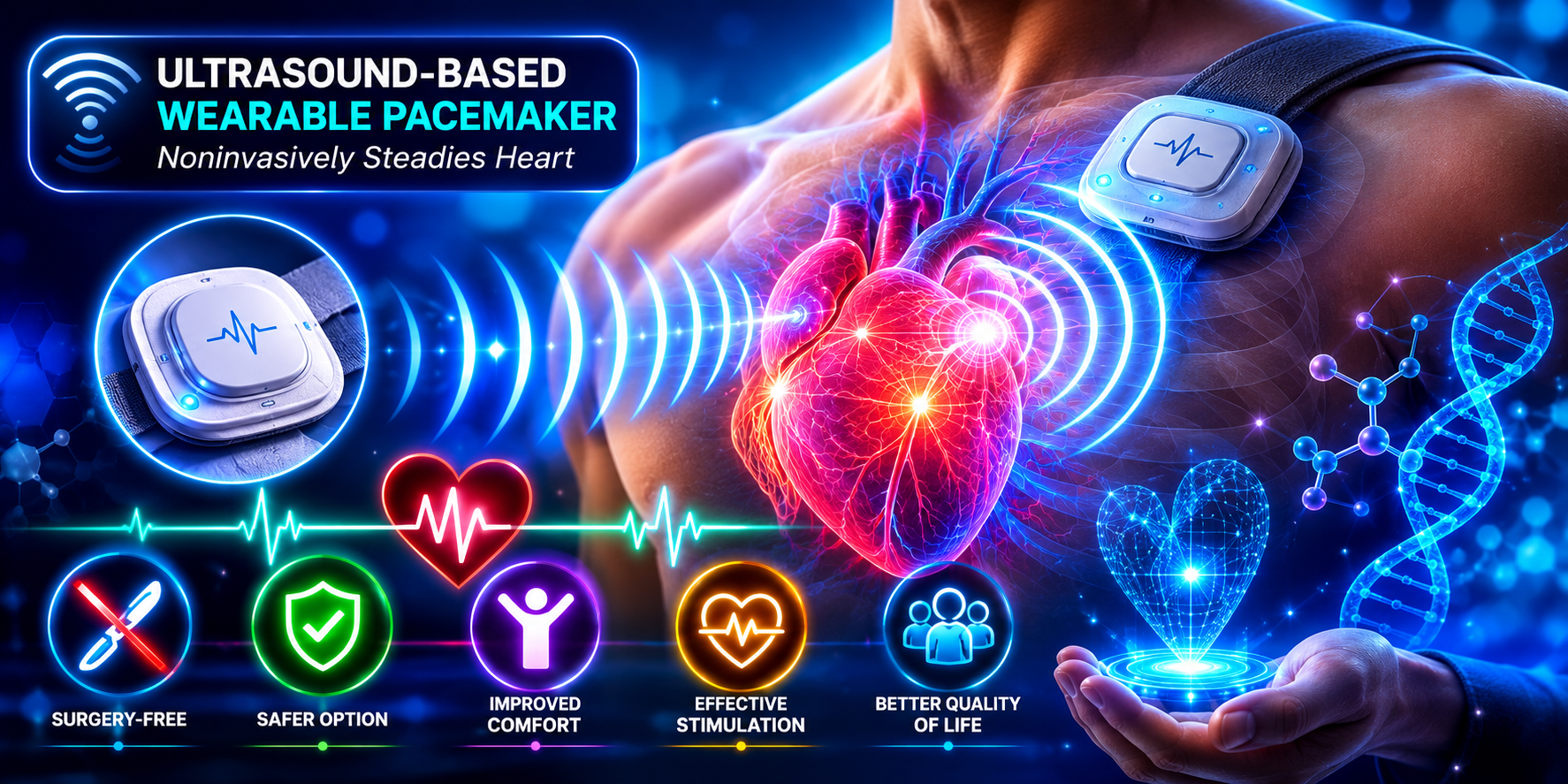
Traditional pacemakers are implanted through surgical procedures and rely on electrical leads to stimulate the heart. In contrast, the newly developed system is designed as a small wearable patch that can be placed on the chest. The device contains miniature ultrasound transducers capable of delivering focused ultrasound waves through the chest wall to cardiac tissue.
According to the research team, the ultrasound stimulation activates specific ion channels within heart cells. When these channels open, calcium enters the cells and triggers the contractions necessary for maintaining a regular heartbeat. Researchers enhanced this response through genetic engineering techniques, enabling more effective cardiac stimulation.
The study demonstrates the potential of ultrasound as a tool not only for medical imaging but also for therapeutic cardiac applications. Early experimental results indicate that the technology can successfully support controlled heart contractions while remaining completely non-invasive.
Beyond cardiac pacing, the researchers envision future wearable systems capable of both monitoring and treating organs deep within the body. Such devices could provide continuous health monitoring and targeted therapy without the need for implanted hardware.
Although the technology remains in the research stage and requires further validation before clinical use, the findings highlight a promising direction for next-generation cardiac care. If successfully translated into medical practice, wearable ultrasound pacemakers could reduce surgical risks, improve patient comfort, and expand treatment options for individuals with heart rhythm disorders